Dydx fees is the cost model behind zero-fee BTC and BONK perpetual trading
In short: Decentralized perpetuals trading fee model for pro crypto markets, with zero-fee BTC and BONK perps during its June campaign.
Dydx fees is a trading-cost structure for dYdX perpetual contracts, highlighted by a June campaign that removes trading fees from BTC and BONK perps. The platform pairs that promotion with deep liquidity, advanced order types, self-custody, and up to 50x buying power for eligible perpetual markets. Traders still need to account for spreads, funding payments, leverage, liquidation risk, and deposit or withdrawal costs outside the campaign mechanics.
Zero-fee BTC and BONK perps during June
The clearest reason people search this topic is the monthly promotion: BTC and BONK perpetual markets trade without platform trading fees during June. That matters most for active traders because repeated entries, exits, and position adjustments turn small taker charges into a visible drag. Removing that charge lets a trader focus on execution quality, funding, and risk control across two very different markets: Bitcoin, the largest crypto asset by liquidity, and BONK, a meme-driven Solana ecosystem asset with faster sentiment swings.
Dydx fees should be read as one part of the total cost of a perpetual position. A zero-fee promotion removes the explicit trading fee on the named markets, while the final trade outcome still reflects the entry price, exit price, slippage, funding rate, liquidation buffer, and the size of the position. The fee line disappears for the covered market, but the market itself still moves.
Where the fee model fits inside dYdX perps
On a practical level, dYdX is built around perpetual contracts rather than simple spot swaps. A perpetual lets a trader go long or short without an expiry date, using margin and a funding mechanism to keep the contract price close to the underlying market. Trading fees sit alongside that structure: they apply when an order executes, while funding accrues between longs and shorts as market conditions change.
The platform is designed for pro crypto trading, so the fee experience connects directly to order routing, liquidity, open interest, and market depth. The official product emphasizes more than 200 markets, substantial lifetime trading volume, and open interest across listed pairs. Those details matter because a low displayed fee loses value when the order book is thin. On an active perps venue, execution and liquidity belong in the same conversation as the fee schedule.
Maker, taker, VIP, and API routes
Perpetual exchanges commonly separate maker and taker activity. A maker order adds liquidity to the book; a taker order removes available liquidity by filling immediately. Dydx fees belong to that same professional trading vocabulary, and advanced users read the fee page through the lens of order style, monthly volume, and program eligibility rather than a single flat number.
VIP and API access add another layer. High-volume traders, market makers, and teams running systematic strategies care about stable execution, predictable fee tiers, and program rules that scale with activity. The platform also promotes an affiliate program that starts at 30% and scales to 50% based on referred volume, which shows how much the business model leans into trading activity, referrals, and long-term participation.
Funding payments are separate from trading fees
A perpetual position has two cost centers that new traders mix together: the exchange trading fee and the funding payment. The trading fee is charged when the order fills. Funding is a recurring transfer between longs and shorts, shaped by the gap between the perp price and the spot reference. When longs are paying, holding a long position becomes more expensive; when shorts are paying, the opposite side receives funding.
This distinction is crucial during a zero-fee campaign. Dydx fees on BTC and BONK perps drop away for the covered period, yet funding continues to matter. A trader who holds a leveraged BONK position through a volatile funding regime faces a different cost profile than someone who scalps BTC for a short interval. The fee promotion changes the execution cost, not the economic design of perpetual contracts.
Deposits from six chains shape the starting cost
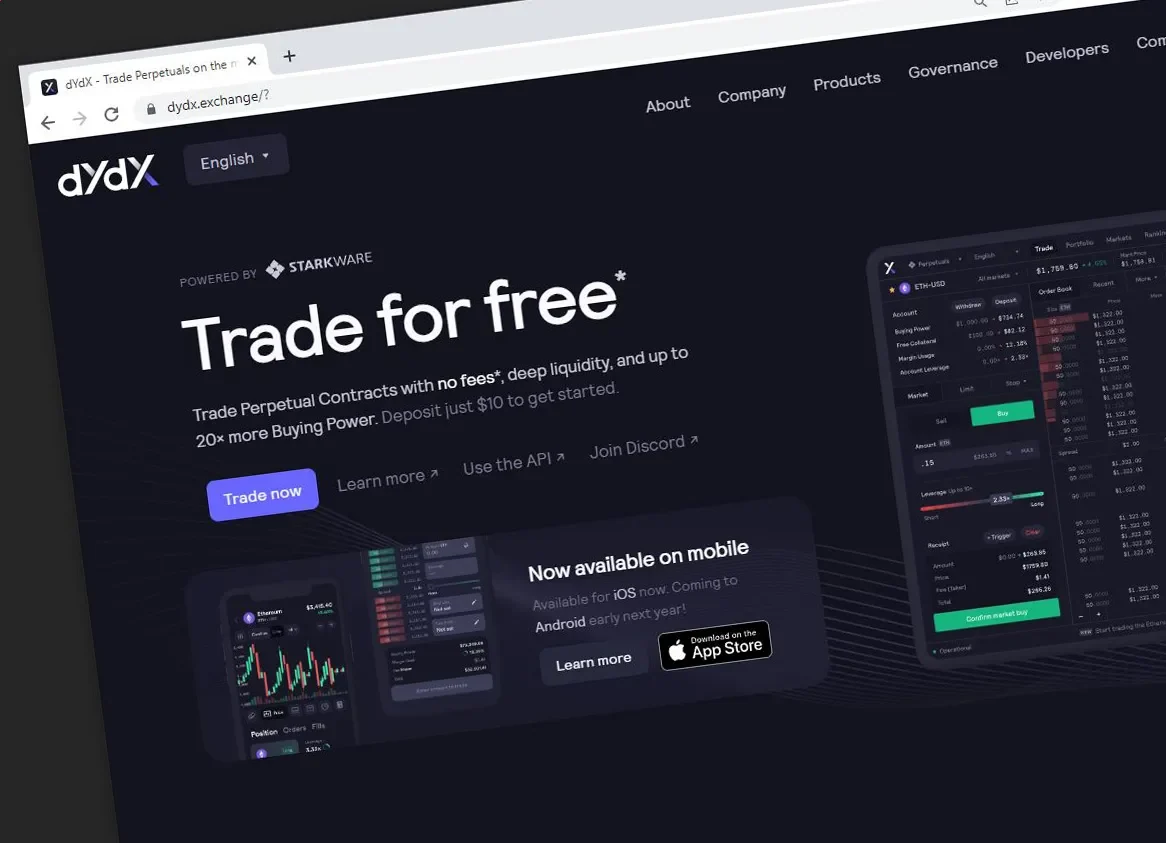
The trading screen is only one part of the journey. dYdX supports seamless deposits from Ethereum, Base, Arbitrum, Polygon, Avalanche, and Optimism, which gives users several routes into the platform. The cheapest practical route depends on the assets already in the user's wallet, the current network fee, and the bridge or transfer path available at the moment of deposit.
Once funds are available for trading, the fee model becomes more relevant to every adjustment. A trader moving collateral from Arbitrum to open a BTC perp has a different setup cost than someone already positioned on a supported chain. That is why the real cost of using dYdX combines network activity before the trade with execution costs after the order reaches the book.
What a trader should check before opening a leveraged position
Leverage amplifies the effect of every basis point. dYdX advertises up to 50x buying power, which turns a small price move into a much larger change in account equity. Lower platform fees help active strategies, but they do not reduce the liquidation mechanics tied to margin, collateral, and market price.
- Confirm whether the market is covered by the current zero-fee campaign.
- Review the expected entry price against visible order book depth.
- Check the funding rate before holding a position beyond a short trade.
- Size leverage so the liquidation price leaves room for normal volatility.
- Account for deposit, withdrawal, and network costs outside the trading fee.
This workflow keeps the emphasis on the full trade path. Dydx fees are easy to compare on a table, but the position survives or fails because of execution, margin, and price movement.
BTC perps versus BONK perps under the same promotion
BTC and BONK sit at opposite ends of the market profile spectrum. Bitcoin perps anchor the venue with deep global demand, broader institutional interest, and tighter liquidity during normal conditions. BONK perps draw a more narrative-driven flow, where momentum, social attention, and sudden volatility dominate the trading session.
A zero-fee offer affects each market differently. On BTC, fee removal benefits high-frequency adjustments and larger directional trades where spreads remain tight. On BONK, the same promotion attracts traders who accept wider moves and sharper reversals. Dydx fees disappear from the explicit cost line for both, yet the risk character of each contract remains very different.
Rewards and affiliates around the fee conversation
The official product copy ties trading, referrals, and rewards into one growth system. That matters because fees are not only a charge to the trader; they also support market incentives, affiliate payouts, and liquidity programs. When a platform reduces fees on selected markets, it shifts attention toward volume, retention, and market share.
The affiliate program is especially relevant to users comparing venues because referral economics influence how creators, trading communities, and teams discuss the exchange. A commission range that starts at 30% and reaches 50% for higher referred volume is unusually prominent in the platform's own messaging. That does not change a trader's liquidation price, but it explains why Dydx fees show up in both trading-cost searches and affiliate-program searches.
Alternatives traders compare when fee sensitivity matters
Perps traders compare dYdX with centralized futures venues, other decentralized perpetual exchanges, and aggregator-style trading interfaces. Centralized exchanges emphasize dense liquidity, fast matching, and broad collateral support. Decentralized perps venues emphasize self-custody, transparent market structure, and direct wallet-based access. Aggregators focus on routing and convenience across multiple liquidity sources.
The right comparison starts with the trade type. A market maker running API strategies looks at fee tiers, latency, and rebates. A directional trader looks at leverage, funding, liquidation tools, and charting. A user coming from spot DeFi looks at supported chains and wallet flow. Dydx fees matter most when they are evaluated beside liquidity, market coverage, and the operational path into the trade.
Getting started with the fee view before the first order
A sensible first session begins with the market page, collateral route, and fee page before any order is placed. Choose the contract first, then review whether the pair is part of the current zero-fee promotion. For June, that means BTC and BONK perps receive special attention. Other markets follow the normal cost structure displayed by the platform.
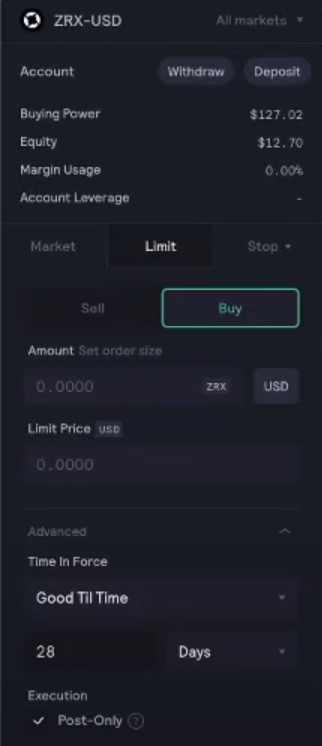
After that, the workflow is direct: connect a supported wallet, deposit from one of the supported chains, select the perp market, choose order type, review margin, and inspect the estimated execution. Dydx fees become meaningful at the final confirmation screen, where the order size, side, leverage, and price turn an abstract fee schedule into a trade-specific cost.
Key questions about Dydx fees
Does the June zero-fee campaign cover every dYdX market?
No. The June zero-fee campaign described in the platform messaging applies to BTC and BONK perpetual contracts, not every listed market. Other perps follow the active fee schedule shown by dYdX at the time of trading. Traders should separate promotional market coverage from the broader fee model, because market selection changes the explicit trading cost.
What costs remain when BTC and BONK perps have no trading fee?
Funding payments, spreads, slippage, liquidation risk, and network costs remain relevant. A zero trading fee removes the platform fee on the covered execution, but it does not freeze the order book or change the funding mechanism. A leveraged position still gains or loses value based on price movement, margin usage, and the funding rate over the holding period.
Can API traders use the same fee structure as manual dYdX traders?
API traders operate on the same venue, but their real cost picture depends on volume, order style, and any eligible VIP or program terms. Systematic traders focus on maker and taker behavior because adding liquidity and removing liquidity create different economics. Manual traders care about the same mechanics, but they usually encounter them through the order ticket and fee preview.
Which supported deposit chains affect the setup cost for trading?
dYdX highlights deposits from Ethereum, Base, Arbitrum, Polygon, Avalanche, and Optimism. These chains affect the setup cost because moving collateral into the trading account involves network activity before the perp order is placed. A low trading fee does not erase the separate cost of getting funds from a wallet onto the platform.
Is the dYdX affiliate payout the same thing as a trading discount?
No. The affiliate payout is a referral program mechanic, while a trading discount or zero-fee campaign affects the trader's execution cost. The platform promotes an affiliate range that starts at 30% and scales to 50% based on referred volume. That program rewards distribution and referrals; it should not be confused with the fee charged on an individual order.
Fees on dYdX versus funding rates: which matters more for short trades?
For very short trades, the execution fee, spread, and slippage dominate because the position is opened and closed quickly. Funding becomes more important when a position stays open across funding intervals or when market imbalance makes one side expensive to hold. During a zero-fee BTC or BONK promotion, spread and funding deserve even closer attention.